
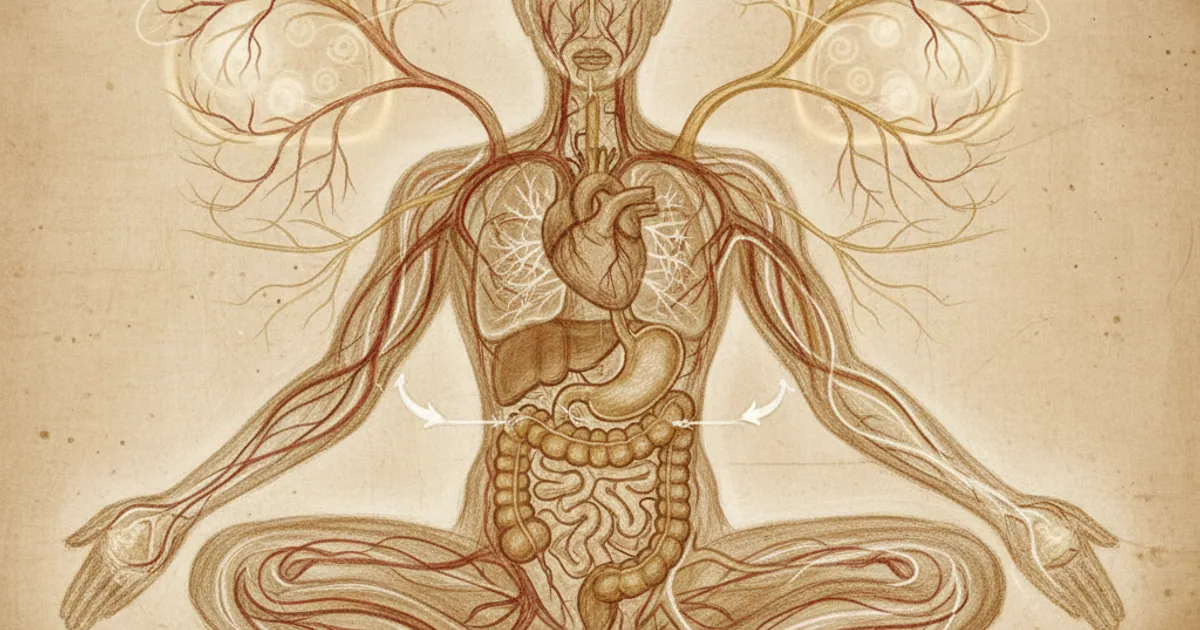
A system of subsystems
Your body is about 30 trillion human cells, plus roughly the same number of bacterial cells living in and on you. These cells are organised into about a dozen organ systems, each handling one specific job in the chemistry of being alive.
The systems aren't independent. Every cell in your body needs oxygen (lungs), glucose (digestion), removal of waste (kidneys + liver), instructions (nervous and endocrine systems), protection (immune system), and to be in roughly the right place (skeleton + muscles). The systems collaborate constantly.
This article gives a quick tour. The deeper articles in this cluster zoom in on specific parts: what blood actually does, why we breathe, the gut microbiome, and why fever helps.
The systems, in one sentence each
Cardiovascular. Heart + blood vessels + blood. Distributes oxygen, glucose, hormones, and white blood cells everywhere; collects waste and CO₂ for disposal. 5 liters of blood pumping through 100,000 km of vessels.
Respiratory. Lungs + airway. Brings oxygen in and removes CO₂. About 20,000 breaths per day, exchanging roughly 11,000 liters of air.
Digestive. Mouth + stomach + intestines + liver + pancreas. Breaks down food into small molecules the body can absorb. Length: ~9 metres of tube from mouth to anus.
Urinary. Kidneys + bladder. Filters blood, removes water-soluble waste, regulates ion balance. The two kidneys process about 180 litres of blood per day to produce ~1.5 litres of urine.
Endocrine. Glands (thyroid, adrenals, pituitary, pancreas, gonads, etc.) that produce hormones — chemical signals released into the blood that travel everywhere and bind to receptors in specific target tissues. Long-range, slow signalling.
Nervous. Brain + spinal cord + peripheral nerves. Fast electrical signalling for coordination, perception, and action. 86 billion neurons in the brain alone.
Immune. White blood cells + lymphatic vessels + lymph nodes + spleen. Detects and destroys invaders and abnormal cells. (See how the immune system learns.)
Musculoskeletal. Bones, joints, cartilage, ligaments, tendons, muscles. Provides structure, protection, and movement. 206 bones, 650+ muscles, 360 joints.
Integumentary. Skin + hair + nails. Barrier against infection and dehydration; temperature regulation; touch sensation. Largest organ by area (about 2 m²).
Reproductive. Ovaries/uterus or testes/etc. Produces gametes and supports reproduction.
Lymphatic. Vessels and lymph nodes that drain interstitial fluid, transport immune cells, and absorb dietary fats. Closely tied to the immune system.
That's eleven systems. You can lump some together (the immune system is often grouped with lymphatic; the integumentary is sometimes counted as part of the cardiovascular periphery). The exact count depends on how you carve up the diagram. The point is — your body is specialised tissue assigned to specific jobs.
How they collaborate
The collaborations are constant. A few examples:
When you exercise. Your muscles need more oxygen. The nervous system senses the demand. The heart speeds up (cardiovascular). You breathe faster (respiratory). The liver releases stored glucose (digestive/endocrine). Sweat starts (integumentary). Stress hormones rise (endocrine). All within seconds.
When you eat. The digestive system breaks food down. The cardiovascular system carries the absorbed nutrients to cells everywhere. The liver processes incoming compounds, storing some, releasing others. The pancreas secretes insulin (endocrine) to tell cells to take up glucose. The kidneys handle the water and waste load.
When you get an infection. The immune system spots the invader. Lymph nodes swell with white blood cells. Fever raises body temperature (covered in why fever helps) — coordinated by the endocrine and nervous systems. Your appetite drops to conserve energy. You feel tired so you rest. Multiple systems shifting their behaviour together.
When you sleep. The brain (nervous system) cycles through stages. Growth hormone surges (endocrine). The glymphatic system flushes waste from brain tissue. Memory consolidation happens. Immune function ramps up. Cardiovascular pressure dips. (See why we need sleep.)
Almost everything you do involves multiple systems working together. Disease is usually one or more systems failing to do their job, which propagates to others.
What stays the same — homeostasis
Despite constant activity, the body keeps about 100 different variables remarkably stable:
- Core temperature: 37 °C ± 0.5
- Blood pH: 7.35-7.45 (very tight)
- Blood glucose: 4-7 mmol/L
- Blood sodium: 135-145 mmol/L
- Blood pressure: 120/80 mmHg (with daily variation)
- Blood oxygen saturation: 95-100%
This regulation is called homeostasis. It's maintained by feedback loops — when a variable drifts, sensors detect it and trigger compensating responses. Get cold, you shiver; get hot, you sweat; blood pressure drops, blood vessels constrict and the heart speeds.
Most homeostatic loops involve multiple organ systems. Blood pressure regulation involves the kidneys, heart, blood vessels, and endocrine glands. Blood pH involves the lungs and kidneys. Body temperature involves the skin, blood vessels, muscles, sweat glands, and brain.
When homeostasis fails persistently, you have chronic disease. Diabetes is glucose regulation failing. Hypertension is blood pressure regulation failing. Many autoimmune diseases are immune homeostasis failing.
Where the body's chemistry happens
Most cellular chemistry happens inside cells. The bloodstream is a transport network — delivering raw materials, removing waste — not where reactions happen. Each tissue has its own specialised cell types running their own specific chemistry:
- Liver cells (hepatocytes) detoxify, store glycogen, manufacture proteins, process incoming amino acids.
- Muscle cells contract on signal, store glycogen, can switch between aerobic and anaerobic metabolism.
- Neurons maintain electrical potentials, release neurotransmitters at synapses.
- Red blood cells carry oxygen via hemoglobin.
- Pancreatic beta cells produce insulin on demand.
- Bone marrow stem cells continuously produce new blood cells.
Each cell type is specialised, and most damage and disease is at the cell level. A heart attack is damage to heart muscle cells. Alzheimer's is damage to specific neurons. Type 1 diabetes is destruction of pancreatic beta cells. Cancer is cells losing control of their own division.
What's broken in disease
Most disease can be mapped to one or more systems failing:
- Cardiovascular disease. Plaque in arteries (atherosclerosis) restricts blood flow. Heart muscle damaged. Vessels rupture.
- Type 1 diabetes. Immune system destroys insulin-producing cells.
- Type 2 diabetes. Cells stop responding to insulin properly.
- Asthma. Airways inflame and constrict.
- Crohn's / IBD. Immune system attacks the digestive tract.
- Cancer. Cells escape division control, often after accumulating mutations.
- Alzheimer's. Neurons die in characteristic patterns; misfolded proteins accumulate.
- Hypertension. Blood pressure regulation persistently elevated.
Each maps to specific cells and specific systems. Treating disease is usually a matter of: prevent more damage, restore function where possible, manage what can't be restored.
If you'd like a 5-minute personalized course on any specific organ system, NerdSip can generate one — or browse the other articles in this cluster for specific deep-dives.
The takeaway
Your body is about 30 trillion cells organised into roughly a dozen organ systems, each handling one part of the chemistry of being alive. The systems collaborate constantly through feedback loops that keep about 100 internal variables stable within tight ranges. Disease is one or more systems failing to maintain their part, with downstream effects across the rest. Understanding the body means understanding both the systems individually and how they coordinate. The articles in this cluster cover specific systems in detail.

Comments 0
No comments yet. Be the first to share your thoughts.