
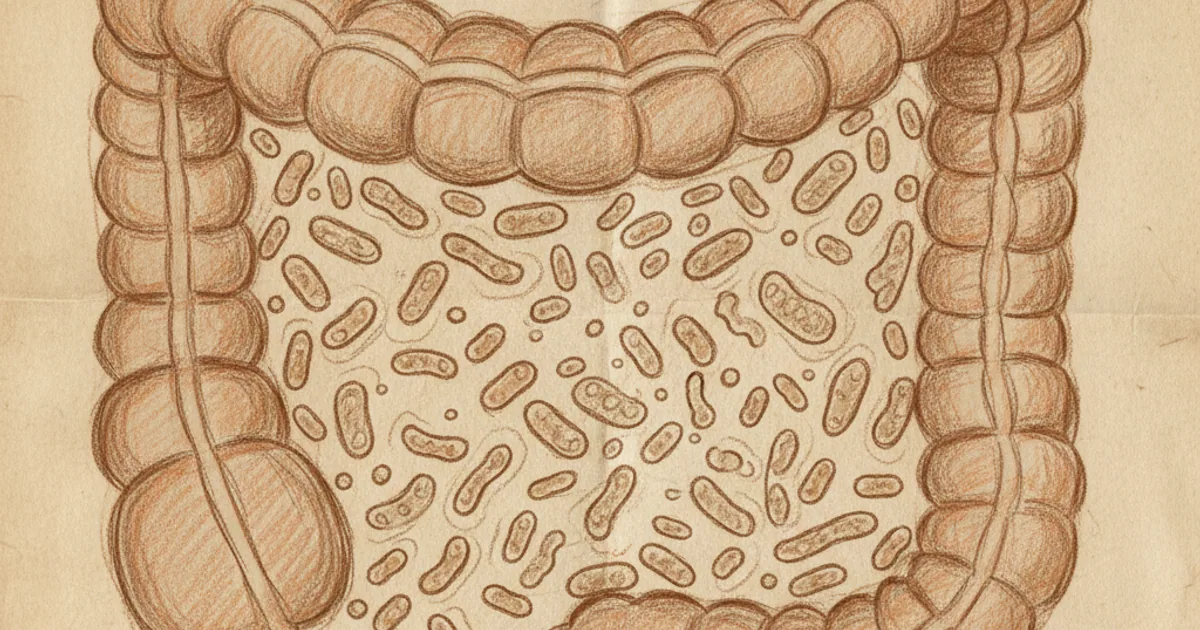
Trillions of roommates
Your digestive tract is home to about 40 trillion microbes — bacteria, archaea, fungi, and viruses — from 500-1000 species. Most live in your large intestine, which is essentially a long fermentation chamber where microbes process whatever your own digestive enzymes couldn't break down.
You're not just hosting them. You and they have evolved together for millions of years into a relationship where you're each doing things the other can't, in exchange for resources. They digest fibres for you; you provide them with steady food, warmth, and a humid environment. The deal works — or fails — in ways that affect your health profoundly.
We're still in the early days of understanding the microbiome. Major scientific progress has happened only since the 2000s, when DNA sequencing made it possible to identify which species are present. We know they're important; we're still figuring out exactly how.
What they actually do
Digest fibre. Plant cell walls — fibre — are largely indigestible to human enzymes. Gut bacteria break them down through fermentation, producing short-chain fatty acids (SCFAs): acetate, propionate, butyrate. Butyrate in particular is the main fuel for the cells lining your colon. Without enough fibre for the microbiome to ferment, those cells underperform and the colon wall thins.
Make vitamins. Several B vitamins (B12, biotin, folate) and vitamin K are produced by gut bacteria. You don't get all your vitamin K from leafy greens; some comes from microbial production in your gut. Antibiotics that wipe out the microbiome can produce vitamin K deficiency.
Occupy ecological space. A healthy microbiome takes up the available niches in your gut. Pathogens trying to colonize find every spot already occupied. This is called colonization resistance, and it's one reason healthy people are harder to infect with foodborne pathogens.
Train the immune system. Your immune system has to learn what's friendly (your microbiome) and what's hostile (pathogens). Exposure to a diverse microbiome in early life helps calibrate this. Children with less microbial exposure have higher rates of allergies and autoimmune disease (the "hygiene hypothesis"). Adults can still influence immune function via the microbiome, but the foundational calibration happens in early childhood.
Influence mood and behaviour. The "gut-brain axis" is a two-way communication system. Some gut bacteria produce neurotransmitter-like molecules (or their precursors): serotonin precursors, GABA, dopamine. Others affect the brain through immune signalling or the vagus nerve. The full mechanism is unclear, but mood disorders, autism spectrum, and some neurodegenerative diseases all show correlations with microbiome composition. Causality is harder to establish.
Process drugs. Many medications are metabolized in part by gut bacteria, which can affect how the drug works in you specifically. People with different microbiomes can respond differently to the same drug. This is an active research area for personalized medicine.
Composition varies enormously between people
Your microbiome composition is highly individual. The species and ratios you carry differ substantially from those in your roommate's gut, even if you've eaten the same diet for years. Major factors that shape it:
How you were born. Babies born vaginally pick up their mother's vaginal and skin microbiome. C-section babies pick up more environmental microbes from the hospital. The early populations affect immune development.
Breastfeeding vs formula. Breastmilk contains specific oligosaccharides (HMOs) that feed particular bacteria, especially Bifidobacterium species. Formula-fed babies have noticeably different microbiomes for months.
Antibiotics. A course of broad-spectrum antibiotics can wipe out 30-50% of microbiome diversity. The community usually partly recovers within months, but some species don't come back without re-introduction.
Diet. High-fibre, plant-diverse diets support more diverse microbiomes. Western diets (low fibre, high processed food) support less diverse ones with more inflammatory species. Changes in diet affect the microbiome within days.
Geography. People from different regions have measurably different microbiomes, partly due to diet, partly to local microbial environments.
Aging. Diversity tends to decrease in old age, partly due to dietary changes and antibiotics, partly intrinsic.
When the microbiome goes wrong
C. difficile infection. Antibiotics wipe out the normal gut community; Clostridium difficile (often acquired in hospitals) takes advantage of the empty niche and proliferates, causing severe diarrhoea. Standard antibiotic treatment often fails and the infection recurs. Fecal microbiota transplant (FMT) — putting a healthy person's microbes into the patient — has >90% success rate for this condition. The infection ends because the new microbiome outcompetes C. difficile.
Inflammatory bowel disease. IBD (Crohn's disease, ulcerative colitis) involves chronic gut inflammation. Microbiome composition is consistently disturbed in IBD patients — less diverse, with some "good" bacteria missing. Whether the disturbed microbiome causes the inflammation or vice versa is still debated, probably some of both.
Obesity and metabolic disease. Lean and obese people have measurably different microbiomes on average. Mice transferred microbiome from obese humans gain more weight than mice given lean-human microbiomes on the same diet. The mechanism involves how the microbiome extracts and uses energy from food. This doesn't make obesity simply a microbiome problem, but it's part of the picture.
Allergies and asthma. Less diverse early-life microbiome correlates with more allergies, asthma, eczema. The "hygiene hypothesis" — that ultra-clean modern environments under-train the immune system — has been refined into the "old friends hypothesis": specific microbes the immune system evolved to handle are missing in modern environments.
What "improve your microbiome" actually means
Marketing of probiotics and prebiotic supplements often promises more than the science supports. Realistic things you can do:
Eat more diverse plant foods. The strongest predictor of microbiome diversity is the variety of plants in your diet. Studies suggest aiming for 30+ different plant species per week. Diversity in equals diversity out.
Eat fermented foods. Yogurt, kefir, sauerkraut, kimchi, miso, kombucha — all contain live microbes. Most don't persistently colonize, but they provide regular exposure and may influence gut chemistry transiently.
Avoid unnecessary antibiotics. Broad-spectrum antibiotics are sometimes necessary but always disrupt the microbiome. Take them when needed; don't take them when not.
Be cautious of probiotic supplements. They're heavily marketed but have variable evidence. Most studies show modest effects at best. The exception is specific strains for specific conditions (e.g., S. boulardii for antibiotic-associated diarrhoea has solid evidence).
Manage stress. Chronic stress measurably affects the microbiome, partly through cortisol's effects on gut motility and immune function.
What we don't yet understand
The microbiome field has been over-hyped in popular media. Real open questions:
- Which microbes do specific jobs, vs which are just there?
- How much of mood and behaviour really is microbiome-driven?
- Can specific microbiome interventions reliably treat specific conditions outside C. difficile?
- What's the role of the virome (the viral component of the microbiome)?
- How does the microbiome interact with circadian rhythms?
The field is moving fast. Strong recommendations are often premature. Stick to the broad guidance (diverse diet, less unnecessary antibiotics) and be skeptical of specific supplements with grandiose claims.
If you'd like a guided 5-minute course on the gut microbiome and what's actually known, NerdSip can generate one.
The takeaway
Your gut microbiome is roughly 40 trillion microbes from hundreds of species, mostly in your large intestine. They digest fibres, make vitamins, train your immune system, occupy ecological space that would otherwise be available to pathogens, and influence mood through the gut-brain axis. Composition is highly individual and shaped by birth method, diet, antibiotics, and lifestyle. The microbiome is real, important, and still poorly understood — strong claims should be greeted skeptically. A diverse plant-rich diet is the best-supported way to support a healthy microbiome.

Comments 0
No comments yet. Be the first to share your thoughts.