
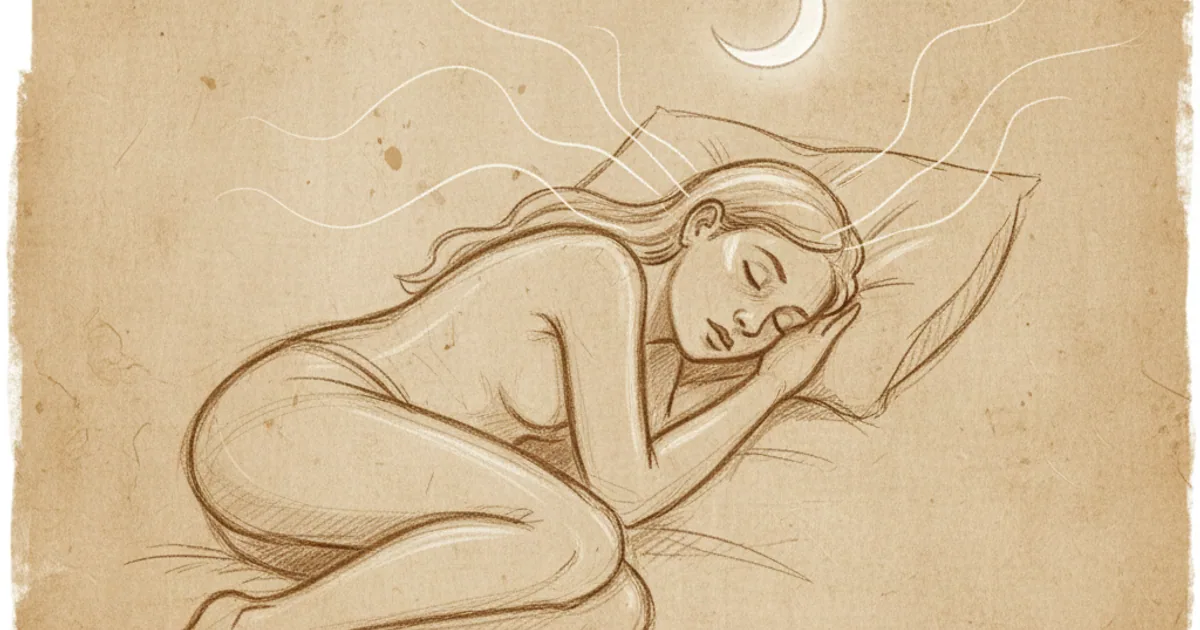
Not just rest
A third of your life is spent unconscious. From an evolutionary point of view, this is bizarre — sleeping animals can't hunt, can't reproduce, and can't avoid predators. Whatever sleep is doing, it must be doing something so important that nature accepts the cost.
We now know what most of that "something" is. Sleep is when the brain does three different essential jobs:
- Memory consolidation — moving the day's learning into long-term storage.
- Metabolic cleaning — flushing protein waste out of brain tissue.
- Chemical reset — rebalancing neurotransmitters that drive attention, mood, and motivation.
Skip sleep and any one of these starts failing. Skip it chronically and they all fail together, with measurable consequences for cognition, mood, immune function, and long-term health.
The architecture of a night
Adult sleep cycles through stages roughly every 90 minutes. A typical 8-hour night contains 4–5 of these cycles.
- N1: light sleep, the transition stage. A few minutes per cycle.
- N2: deeper, with characteristic spindle and K-complex brain waves. About half of total sleep.
- N3: slow-wave or deep sleep. Concentrated in the first half of the night. This is when most memory consolidation and glymphatic cleaning happen.
- REM: rapid-eye-movement sleep. Concentrated in the second half of the night. Vivid dreams. Brain activity looks almost waking; muscle tone is largely paralysed.
Each cycle has progressively less slow-wave and more REM. If you cut your night short by sleeping 6 hours instead of 8, you don't lose 25% of all stages equally — you disproportionately lose REM, which is concentrated late.
Memory consolidation
During slow-wave sleep, the hippocampus (short-term memory holding area) replays the day's events at ~10× normal speed. The neocortex (long-term storage) "listens" and starts encoding stable representations.
You can watch this in animals. Rats that run a maze during the day show neural firing patterns in the hippocampus during sleep that match — sped up — the firing patterns they had while running the maze. This is consolidation in progress.
If you interrupt slow-wave sleep — wake the subject up specifically during N3 — memory the next day is impaired even if total sleep duration is preserved. The slow-wave phase isn't replaceable.
REM sleep does something different. It seems to integrate new memories with existing knowledge and emotional context. Skipping REM impairs procedural learning (skills) and emotional regulation but spares simple declarative recall.
The practical implication: study, then sleep on it. Long-term retention is built during the night after the learning, not just during the learning itself — which is why the best way to pick up a new skill is a little each day with real sleep in between, not one frantic cram. All-nighters trade short-term recall (tomorrow's test) for long-term retention (next month's exam, or actual real-world use).
The glymphatic system — brain cleaning
This is one of the most surprising recent discoveries in neuroscience. The work was published by Maiken Nedergaard's group in 2012–2013.
The brain has its own waste-clearance system, called the glymphatic system (glial + lymphatic). It works almost entirely during sleep. Here's the basic mechanism:
- Brain cells (specifically the supporting glial cells) shrink by about 60% during sleep.
- That shrinkage opens channels between cells.
- Cerebrospinal fluid (CSF) rushes through these channels, picking up metabolic waste produced during waking activity.
- The waste-laden CSF then drains via lymphatic vessels in the meninges.
During waking hours, this system is essentially shut off. CSF flow is reduced and channels are closed. Waste accumulates.
One of the proteins the glymphatic system removes is beta-amyloid, the protein that aggregates into the plaques associated with Alzheimer's disease. Chronic sleep deprivation correlates with elevated beta-amyloid; long-term studies link chronic short sleep to higher dementia risk. The mechanism appears to be the same: insufficient glymphatic clearance lets harmful proteins build up.
This finding alone changes the framing of sleep from "useful downtime" to "essential maintenance with no alternative."
Chemistry resets
Several neurotransmitter systems run on day-night cycles tied to sleep:
- Adenosine accumulates during waking hours as a byproduct of energy use. It binds to receptors in the basal forebrain and produces drowsiness. Sleep clears adenosine. (Caffeine works by blocking adenosine receptors — the adenosine is still there, but you don't feel it.)
- Dopamine, serotonin, norepinephrine receptor sensitivities are modulated by sleep. After poor sleep, these systems are less responsive, producing the dull, unmotivated feeling everyone recognises.
- Cortisol has a strong circadian rhythm, peaking around waking time. Disrupted sleep flattens the rhythm and produces chronic stress patterns.
The upshot: if you've ever pulled an all-nighter and noticed everything seemed less rewarding and harder to focus on the next day, it wasn't your imagination. It was the chemistry being out of phase.
The cost of chronic short sleep
Various longitudinal studies have shown:
- Cognitive performance on a wide range of tasks degrades after even moderate restriction (6 hours/night). Most people stop noticing the degradation within a few days, but objective performance keeps falling.
- Immune function drops measurably with insufficient sleep — both vaccination response and infection resistance.
- Insulin sensitivity drops with sleep restriction, contributing to metabolic syndrome and diabetes risk.
- All-cause mortality rises with chronic short sleep (under 6 hours), particularly cardiovascular mortality. The risk-elevation is comparable to moderate smoking.
The kicker: people who chronically under-sleep are usually unaware of their impairment. Lab tests show measurable deficits while subjects rate their performance as "fine." Subjective acclimation to sleep deprivation does not match objective performance recovery.
The 5-hour myth
You'll occasionally meet someone who claims they sleep 5 hours a night and feel great. Some of them genuinely do.
A small subset of the population — well under 1% — carries a variant in the DEC2 gene that lets them function on 4–6 hours of sleep without measurable cognitive penalty. This was first identified in 2009 and confirmed in further studies. It's heritable.
Everyone else who claims to thrive on 5 hours is either:
- Unaware of their actual performance deficit (most common).
- Compensating with high caffeine + strong motivation + youth.
- About to develop chronic health problems.
The "sleep less, achieve more" framing has been thoroughly studied and broadly debunked. Most "highly productive on little sleep" celebrities turn out, on inspection, to take naps or sleep in on weekends.
What you can actually do
The strongest behavioural levers, from the research:
- Consistent schedule — same bedtime and wake time every day, including weekends. Body clock stability matters more than total hours.
- Light exposure — bright morning light, dim evening light. Blue-rich light at night suppresses melatonin and shifts the body clock.
- Cool, dark, quiet bedroom — core temperature drops during sleep; warmth interferes.
- No alcohol within a few hours of sleep. It puts you out fast but fragments sleep and crushes REM.
- No caffeine after early afternoon for most people. Half-life is 5–7 hours.
- No screens in bed, ideally. Mostly about light and arousal, not the screen itself.
- Aerobic exercise during the day, not within a couple of hours of sleep.
Pills (melatonin, benzodiazepines, "Z-drugs") help with falling asleep but produce sleep architecture that doesn't quite match natural sleep — the consolidation and cleaning phases are partially impaired. Useful for jet lag and acute insomnia; not a long-term solution.
The takeaway
Sleep is not optional, not replaceable, and not a luxury. It's when the brain consolidates the day's learning, clears metabolic waste through a fluid system discovered only in 2012, and resets the chemistry that drives attention and motivation. Eight hours a night, consistently, is what the research keeps pointing to. The cost of chronic short sleep is measurable in cognitive performance, immune function, metabolic health, and lifespan — even when you don't subjectively notice the deficit. There's no productivity hack here, just biology that won't be skipped.

Comments 0
No comments yet. Be the first to share your thoughts.