
The headline
For traditional yeast bread, rising comes from two cooperating processes:
- Yeast cells eat sugars in the dough and release CO₂ gas and ethanol as metabolic byproducts.
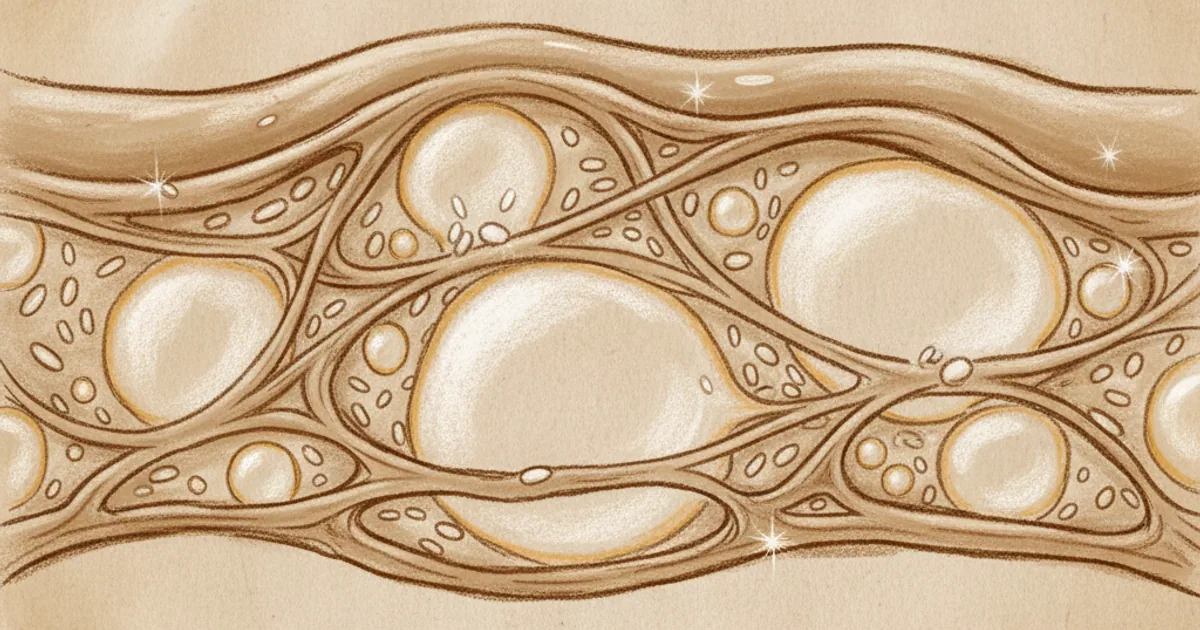
- The gluten network in the kneaded dough is elastic enough to trap that gas, holding the bubbles in place as they expand.
Without a gas source and a gas-trapping structure, dough doesn't rise. Both ingredients have alternatives: chemical leaveners (baking soda, baking powder) produce gas without yeast; steam puffs popovers and choux pastry; egg foams and starch gels trap gas in some gluten-free breads. The underlying principle is universal: a source of gas plus something flexible enough to hold the bubbles in place.
The rest is variations on the theme: different leavening agents (yeast vs baking soda vs steam), different gas-trapping matrices (gluten, egg foam, hydrocolloid networks in gluten-free recipes), different fermentation conditions (warm vs cool, fast vs slow). This article focuses on yeasted wheat bread, which is the dominant case worldwide.
What yeast actually is
Yeast is a single-celled fungus. Baker's yeast is specifically Saccharomyces cerevisiae — the same species used for brewing beer and making wine, just selected over generations for slightly different traits.
Each yeast cell is roughly 5-10 micrometres across, visible only under a microscope. They reproduce by budding (growing a smaller new cell off the side of the original). In good conditions, the population doubles every 1-2 hours.
Three commercial formats:
- Active dry yeast: dried granules. Long shelf life. Traditionally re-hydrated in warm water before use, though modern recipes often skip this.
- Instant yeast: smaller granules, dried so they reactivate faster. Can be mixed directly with dry ingredients. Same species, just processed differently.
- Fresh (cake) yeast: moist cake or block of compressed living yeast cells. Most active, shortest shelf life. Common in professional bakeries.
Most home bakers use active dry or instant. The species and metabolism are identical; just the format differs.
What yeast does in dough
When yeast cells meet water, warmth, and sugar, they wake up and start metabolizing. Through a process called alcoholic fermentation, they convert sugars (glucose, fructose, and maltose from starch breakdown) into two main products:
- Carbon dioxide (CO₂) — the gas that makes bread rise.
- Ethanol (ethyl alcohol) — which evaporates during baking, though some flavour compounds carry over.
The simplified chemistry: C₆H₁₂O₆ (glucose) → 2 CO₂ + 2 C₂H₅OH (ethanol).
Plus dozens of secondary metabolic products — esters, organic acids, aldehydes — which contribute to bread flavour. Longer fermentation means more of these secondary compounds, which is why slow-risen breads taste noticeably more complex than fast-risen ones.
Yeast also produces small amounts of heat as a byproduct. In a large batch of bread dough, you can sometimes feel that the dough is slightly warm to the touch after vigorous fermentation.
Where the sugar comes from
If you've made bread, you might have noticed that most recipes don't have much added sugar. Where does the yeast get its food?
From the flour. Two main paths:
Direct sugars in flour. Wheat flour contains a small amount of free sugars (mostly glucose and fructose) — typically 1-2% by weight. Enough to get yeast started.
Starch broken down by amylase enzymes. Wheat flour also contains enzymes (alpha-amylase and beta-amylase) that break starch into smaller sugars (maltose, glucose) over time. As fermentation proceeds, the enzymes liberate more sugar for the yeast to consume. This is why dough doesn't run out of food in normal fermentation timelines.
Some recipes add a small amount of sugar to boost early fermentation, but it's not strictly necessary. Some recipes (especially long-fermented sourdoughs) work entirely on flour-derived sugars.
What gluten does
CO₂ production alone wouldn't give you bread — the gas would just bubble up and escape, leaving flat dough. The trapping matrix is gluten.
When wheat flour is mixed with water and kneaded, two proteins — gliadin and glutenin — bond into a stretchy, elastic network called gluten. (Full details in what gluten actually is.)
Gluten behaves like a balloon-like network: it can stretch significantly while still holding its structure together. When yeast produces CO₂ gas, the bubbles get trapped in this network rather than escaping. The dough inflates as gas accumulates.
Bread flour has more protein (12-14%) than all-purpose flour (10-12%) and produces stronger gluten networks. Cake flour (8-9% protein) produces weaker networks and is unsuitable for yeast bread.
The gluten network forms during kneading. Kneading aligns and cross-links the protein molecules, building the network. Under-kneaded dough has weak gluten and can't trap gas well; over-kneaded dough has gluten so tight it can't stretch as the gas pushes outward.
Some doughs (high-hydration sourdoughs, ciabatta) develop gluten through time rather than active kneading — long resting periods allow the proteins to self-organize. The result is more open, irregular crumb structure.
The phases of bread rising
A typical yeast bread goes through:
Mixing. Yeast, water, flour, salt, and any other ingredients combined. Yeast begins waking up. Initial gluten formation as flour hydrates.
Kneading (or long resting). Gluten network develops. Dough becomes elastic and smooth. Some early CO₂ produced but most expansion is yet to come.
Bulk fermentation (first rise). Dough rests, typically 1-2 hours at room temperature for direct doughs, or 8-24+ hours in the refrigerator for slow doughs. Yeast multiplies and produces CO₂ throughout. Dough doubles in volume. Flavour compounds accumulate.
Shaping. Dough is divided and shaped. Some gas is degassed in the process — intentional, because the second rise will produce more.
Proofing (second rise). Shaped loaves rest, typically 30 minutes to 2 hours. Yeast produces another round of CO₂. Dough rises again. Surface develops final tension.
Baking. Oven temperature 200-260 °C (400-500 °F). What happens here:
- Oven spring: in the first 5-10 minutes, the dough rapidly expands. The remaining yeast is hyperactive at warm temperatures (peak around 40-50 °C), producing gas quickly. Gas already in the dough expands thermally. Some water vaporizes to steam, adding to expansion.
- Yeast death: above ~60 °C, yeast cells die. No more fermentation. The expansion stops.
- Gluten setting: above ~70-80 °C, gluten proteins denature into a rigid permanent structure. The bread shape is locked in.
- Starch gelatinization: above ~70-90 °C, starches gelatinize and contribute to the crumb structure.
- Maillard browning: above ~140 °C, the crust browns. (See the Maillard reaction.)
- Ethanol evaporation: alcohol from fermentation evaporates throughout baking, mostly gone by the end.
Cooling. Fresh-baked bread continues to set as it cools. Cutting too early releases steam and can result in gummy texture. Most artisan breads benefit from at least 30 minutes of rest before slicing.
What about non-yeast leavening
Two other ways to make bread rise:
Chemical leavening (baking soda, baking powder)
Baking soda (sodium bicarbonate, NaHCO₃) is a base. When mixed with an acid (buttermilk, yogurt, vinegar, cocoa, brown sugar, molasses) and water, it reacts to produce CO₂. Used in quick breads, biscuits, soda bread.
The reaction: NaHCO₃ + acid → CO₂ + salt + water.
Baking powder contains baking soda PLUS a powdered acid (typically cream of tartar or sodium aluminum sulfate). The two react when water is added and the mixture is heated. Double-acting baking powders produce some gas at room temperature and more during baking.
Both produce immediate CO₂ — minutes, not hours. No fermentation, no gluten development needed (and indeed, gluten development is usually unwanted in quick breads, which is why they're mixed minimally). Different texture and flavour from yeast bread.
Steam leavening
Popovers and Yorkshire pudding rise primarily from steam — water rapidly converting to vapor at high oven temperature, expanding the thin batter into a hollow shell. No yeast or baking powder needed.
Choux pastry (cream puffs, éclairs) similarly rises from steam expansion of water trapped in the cooked batter.
Wild fermentation (sourdough)
Sourdough uses a starter culture containing wild yeasts and lactic-acid bacteria, maintained by feeding flour and water periodically. Different from commercial yeast:
- Wild yeast strains, often different species from baker's yeast — Saccharomyces and Candida species are common.
- Bacterial coexistence: lactic and acetic acid bacteria living symbiotically with the yeasts, producing organic acids alongside the CO₂. This is what makes sourdough taste tangy.
- Slower fermentation: typically 8-24+ hours, sometimes days. More time for flavour development and slight breakdown of starches and proteins.
- Bacterial competition: the acidic environment from the bacteria suppresses many spoilage microbes, which is part of why sourdough has historically been used as a method of preserving bread.
Each starter culture is slightly different, with different yeast and bacterial populations depending on the original source, the feeding schedule, and environmental conditions. A bakery in San Francisco has a different starter culture from one in Naples.
Flatbreads — no rise, no problem
Many traditional flatbreads (pita, naan, tortillas, lavash, paratha) have minimal or no rise. Some use yeast but minimal time; some use baking powder; some use no leavening at all.
What makes them work without significant rise:
- Thin enough that texture is controlled by surface and heat rather than internal crumb structure.
- High-heat cooking (tandoor oven, hot skillet) that puffs the dough briefly from steam.
- Cultural context: many flatbreads are eaten with stews and curries where they're not the texture focus.
Some flatbreads do puff briefly during cooking from rapid steam expansion (pita's famous pocket forms this way) but the cooled flatbread is dense compared to risen bread.
Why high-altitude baking is harder
At high altitude:
- Lower air pressure means gas bubbles expand more easily. Bread rises faster.
- Water boils at lower temperatures (~94 °C at 2000 metres elevation). Less heat is available for the dough.
- Lower humidity in many high-altitude environments dries dough faster.
The result: bread can over-rise before the structure sets, then collapse. Recipes for high altitude often reduce yeast slightly, reduce hydration, and increase oven temperature to compensate.
If you'd like a guided 5-minute course on bread chemistry and how to troubleshoot a recipe, NerdSip can generate one.
The takeaway
Bread rises because yeast metabolizes sugars in the flour and produces CO₂ as a byproduct, while the gluten network developed by kneading flour with water traps the gas in bubbles. Baking kills the yeast, evaporates the ethanol, sets the gluten into a permanent structure, gelatinizes the starches, and browns the crust. Variations — sourdough's wild yeasts and bacteria, quick breads using baking soda for instant CO₂, flatbreads with minimal leavening — all use different gas sources but rely on the same gas-trapping principle. The combined chemistry has been refined over thousands of years; the molecular biology has been understood for about 150.

Comments 0
No comments yet. Be the first to share your thoughts.