
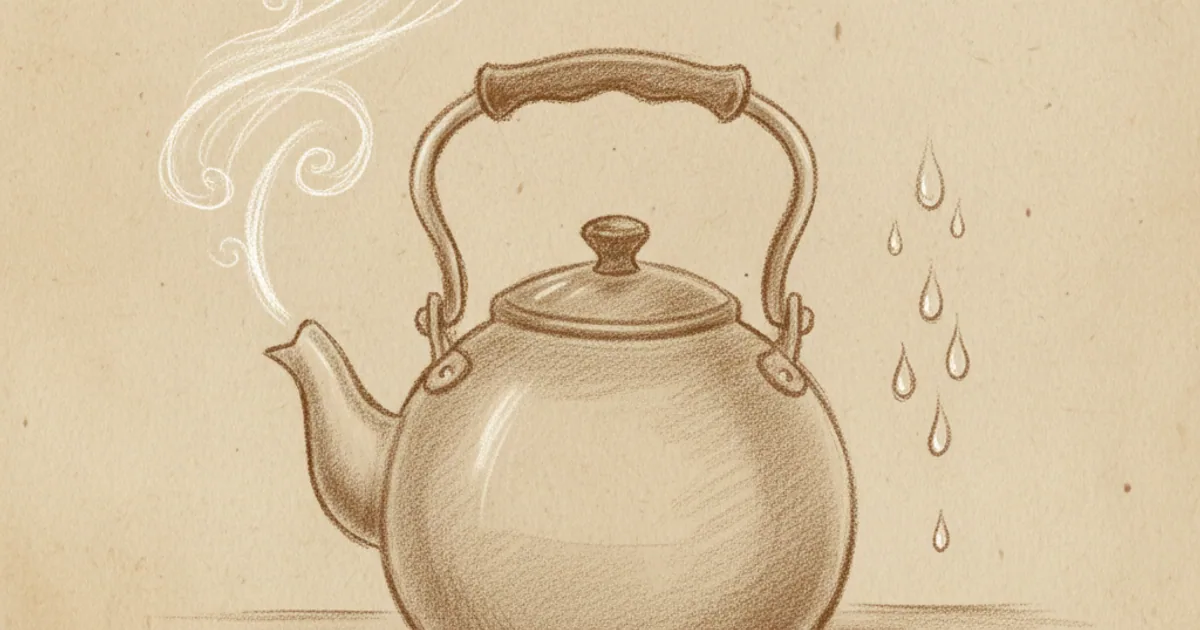
The energy that hides in phase changes
Put a thermometer in a pot of ice water and start heating it. The temperature climbs cleanly from −20°C up to 0°C. Then — strangely — it stops climbing. The ice slowly turns to water while the thermometer sits stuck on 0°C. Only when the last sliver of ice is gone does the temperature start climbing again.
You're feeding energy in the whole time. Where is it going?
Into breaking the bonds that hold the ice together. That hidden energy — energy that disappears into a phase change without changing the temperature — is called latent heat, from the Latin latere, "to lie hidden."
Two flavours of latent heat
For most everyday substances there are two phase changes that matter:
- Latent heat of fusion — solid to liquid (or back).
- Latent heat of vaporization — liquid to gas (or back).
For water:
- Fusion: 334 kJ/kg. That's how much energy is needed to melt one kilogram of ice at 0°C into one kilogram of water at 0°C.
- Vaporization: 2,260 kJ/kg. That's how much to boil one kilogram of water at 100°C into one kilogram of steam at 100°C.
Compare that to the specific heat capacity of liquid water: about 4.18 kJ/kg/K, or 418 kJ to heat 1 kg of water across the entire 0°C–100°C range.
So vaporizing water releases more than five times the energy needed to heat it from freezing to boiling. The phase change is where the real energy lives.
Why temperature freezes during a phase change
Temperature is the average kinetic energy of molecules. Adding heat usually means molecules jiggle faster — temperature goes up.
During a phase change, the energy you add is doing something different. It's breaking the intermolecular bonds that hold the substance in its current phase — hydrogen bonds in liquid water, for example. The kinetic energy of the molecules doesn't change (so temperature stays put); the potential energy stored in those bonds is what changes.
Only once all the bonds of that phase are broken can additional heat go back to speeding up the molecules and raising the temperature again.
This is also why freezing releases heat. As water turns to ice, those hydrogen bonds re-form, and the energy that was hidden in breaking them is released into the surroundings. Fruit growers use this trick: spraying water on citrus crops during a cold night sounds counterintuitive, but as the water freezes on the leaves it releases enough heat to keep the leaf surface from dropping much below 0°C and protects the fruit from frost damage.
Why sweat works
When you sweat, water sits on your skin. To evaporate — to make the phase change from liquid water to water vapour — each gram needs to absorb its share of the latent heat of vaporization. That energy comes from your skin and the layer of air immediately above it.
So the sweat doesn't cool you because it's wet. It cools you because it's evaporating. Wipe sweat off before it evaporates and you've removed the cooling agent before it could do anything.
Humid air slows evaporation (the air is already nearly saturated with water vapour, so fewer molecules leave the skin surface). That's why a humid 30°C day feels much worse than a dry 30°C day — your sweat just sits there.
Why hurricanes are heat engines
A hurricane forms over warm ocean water. The warmth evaporates seawater, releasing water vapour high in latent heat. That vapour rises, cools, condenses into clouds. Condensation releases the latent heat back — into the air at altitude.
The released heat warms the air, which makes it rise faster, which pulls in more humid air at the surface, which evaporates more water, which condenses higher up, which releases more heat. A positive feedback loop. The hurricane's spin and devastating wind speeds are powered by latent heat, not by surface temperature directly.
If you removed the phase-change step, hurricanes wouldn't exist. The atmosphere is, in some sense, a giant water-cycle heat engine running on latent heat.
Steam burns worse than boiling water
Same temperature (100°C), but a gram of steam landing on your skin releases its latent heat of condensation as it turns back to water, plus the cooling-from-100°C heat. That's roughly 2,260 + 100 × 4.18 ≈ 2,678 joules per gram. A gram of 100°C water only releases the second part — about 418 joules. Steam delivers more than 6× the energy.
This is also why pressure cookers work: at higher pressure, water boils at higher temperatures (around 120°C), and steam at that temperature contains even more energy to cook with.
Practical reach
- A glass of water cools faster with ice cubes than with refrigerated water at 0°C — because the ice has to absorb 334 kJ/kg of latent heat to melt, which it pulls from your drink.
- Air conditioners exploit the latent heat of refrigerants vaporizing inside the cold coils.
- Frozen meals stay frozen longer in shopping bags than refrigerated ones, even at the same starting temperature, because they hold a reserve of latent heat that has to be paid before they can warm up past 0°C.
The takeaway
Latent heat is the hidden currency of phase changes. It's the reason ice doesn't warm up until it's melted, the reason a kettle whistles forever at 100°C until the water's gone, the reason sweat cools you, and the reason hurricanes pack the energy they do. Whenever you see a substance change phase at constant temperature, an enormous amount of energy is being either absorbed or released invisibly — and most of what we call "temperature regulation" in nature is really latent-heat management in disguise. One tidy idea that quietly explains sweat, frost-protected oranges, and hurricanes is a perfect example of the kind of topic anyone can learn and never look at the world the same way again.

Comments 0
No comments yet. Be the first to share your thoughts.